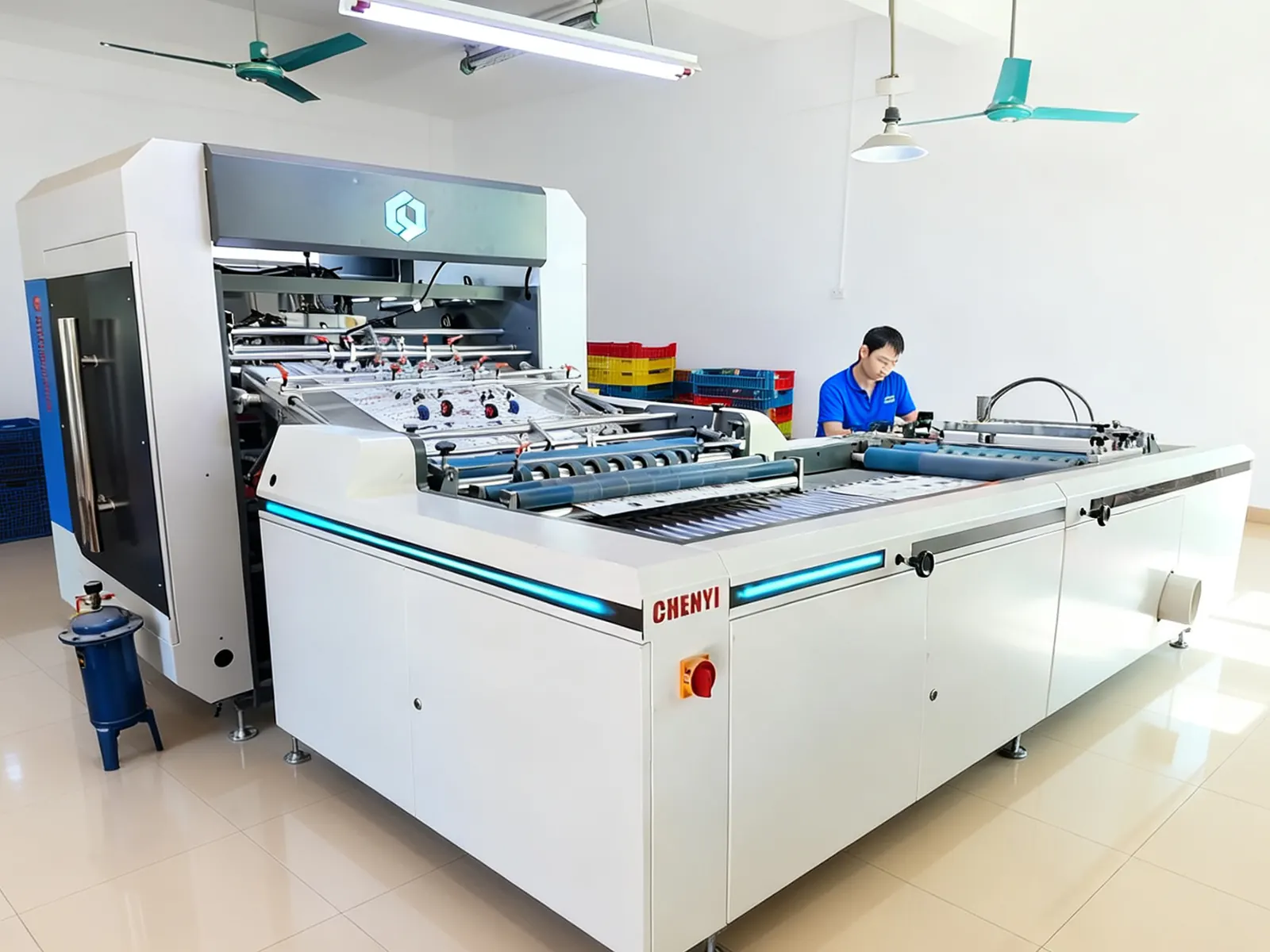
A deck moves through nine stations on one site: prepress, offset, lamination, texture, cutting, sorting, box making, shrink wrapping and palletising. Each station hands over a checked batch, not a hopeful one.
Cards do not leave the building between these steps — which is why a reprint matches the first run.
CTP plate output, colour separation and ink-key presetting from your approved file.
Heidelberg XL105, 4+1 colours with inline coating — samples and bulk on the same press.
Matte, gloss, linen or air-cushion film applied to both sides of the sheet.
Embossing, spot UV and hot foil stamped onto the laminated sheet where specified.
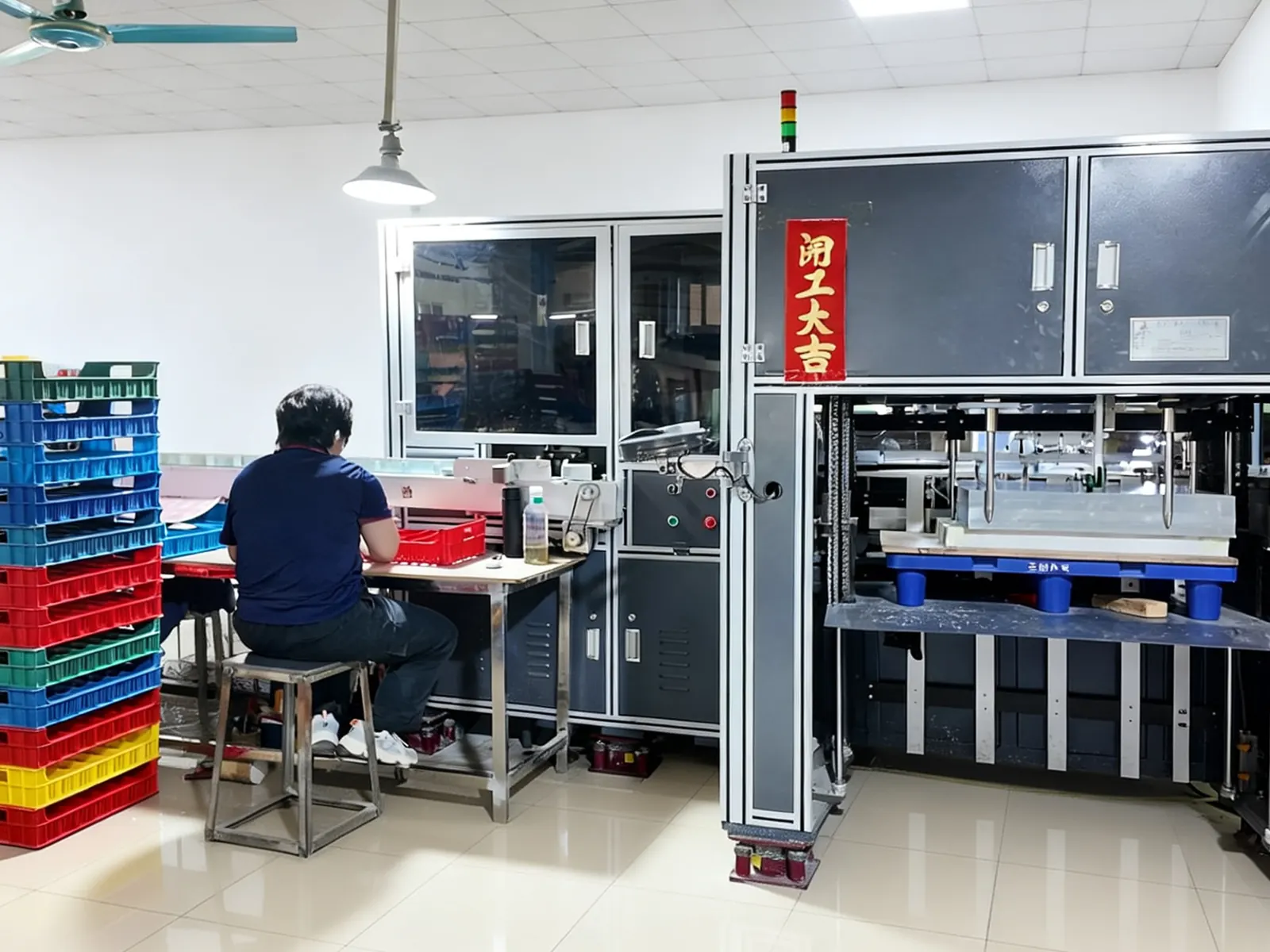
Die-cutting to size with rounded corners, checked against the dieline.
Automatic collation builds each deck in sequence, then counts it out.
Tuck or rigid boxes glued, assembled and fitted with trays and booklets.
Shrink wrap, cartons, labels and palletising to your warehouse rules.
Capacity is not a sales number here — it decides how quickly your job can be scheduled. Fifty-plus automated machines across the line mean a 5,000-deck run and a 50,000-deck run use the same stations, simply for different lengths of time.
Standard MOQ is 500 decks per design. Smaller orders are handled case by case: if your order is under 500 decks, our sales team will work with you to find the most cost-effective option.
No colour translation between a digital proof machine and the offset press — approval transfers directly.
If density or registration drifts, the line is stopped before the batch grows. It is cheaper than sorting defects out later.
Jobs are booked with slack for drying, foil curing and box assembly, so one late component does not push the ship date.
The figures below are what we plan production against. Sampling and production windows start from approved artwork, not from the inquiry date.
Send the deck specification and target delivery window — we will confirm which line it runs on and when it can ship.